Co-Founder, Product Designer
Greet is an iOS app that enables you to connect with friends and groups across social platforms
iOS app faciliating better contact for groups and friends
Team
Jo Turtel Product Manager, Co-Founder
Roopal Kondepudi Developer
Dylan Zucker Developer
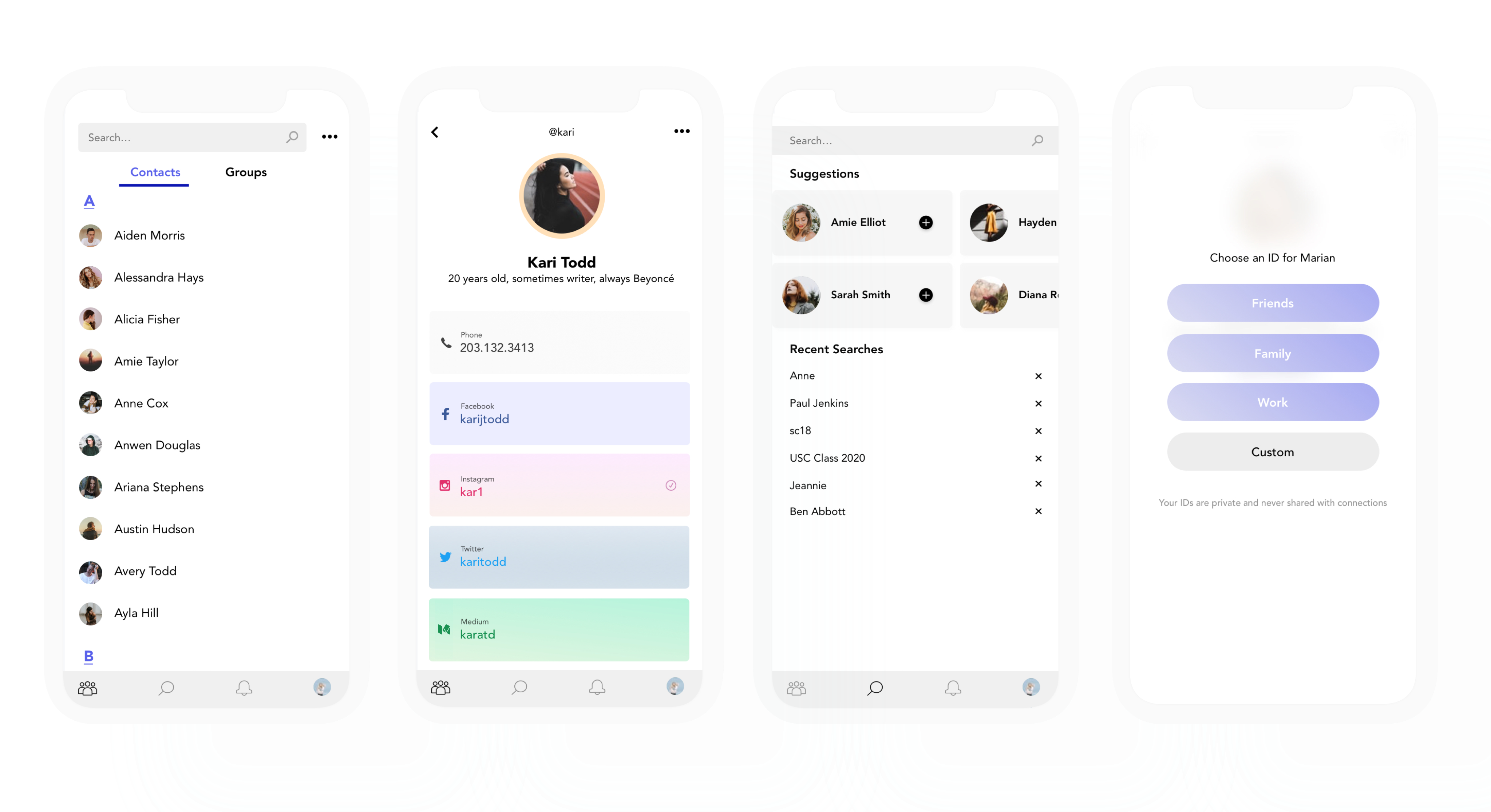
Instead of taking months for a new friendship to digitally form on each individual social network, Greet makes connecting instantaneous, while keeping all information defined by a single contact identity. Designed for iOS, Greet allows you to always access contacts while seamlessly syncing contact information across your platforms and apps.
Instead of taking months for a new friendship to digitally form on each individual social network, Greet makes connecting instantaneous, while keeping all information defined by a single contact identity. Designed for iOS, the cloud based aggregate of your digital presence allows you to always retain contacts and seamlessly syncs contact information from Fleet across your platforms and apps.
Connecting across platforms is tedious
The Problem— Connecting across platforms is tedious and awkward
Though social networks have offered new ways to connect, it's hard to make the initial connections. Many platforms are segmented and lack integration for linked accounts (some for links in general).
We saw flaws in the process, observing how clumsy it is to pass phones in a circle to exchange numbers with a group, to the guessing game of adding people online. We learned how time-consuming it was for people to connect, especially when joining a new community or creating a new social account. It made the process frustrating, and ultimately not worth the effort for many. Everyone we spoke to had asked a mutual friend for someone's contact information— because of a new phone, username, etc. We found that ultimately, a lack of online connection resulted in groups feeling fractured and friends falling out of touch.
Though social networks have offered new ways to connect, it's hard to make the initial connections. Many platforms are segmented and lack integration for linked accounts (some for links in general).
We saw flaws in the process, observing how clumsy it is to pass phones in a circle to exchange numbers with a group, to the guessing game of adding people online. We learned how time consuming it was for people to connect, especially when joining a new community or creating a new social account. It made the process frustrating, and ultimately not worth the effort for many. Everyone we spoke to had asked a mutual friend for someone's contact information— because of a new phone, username, etc. We found that ultimately, a lack of online connection resulted in groups feeling fractured and friends falling out of touch.
Understanding how people interact digitally
Understanding how people interact digitally
To better understand how people within Greet's target demographic used social networks and communicated with peers digitally, we interviewed users, sent out a survey, and took advantage of Pew Internet and other studies.
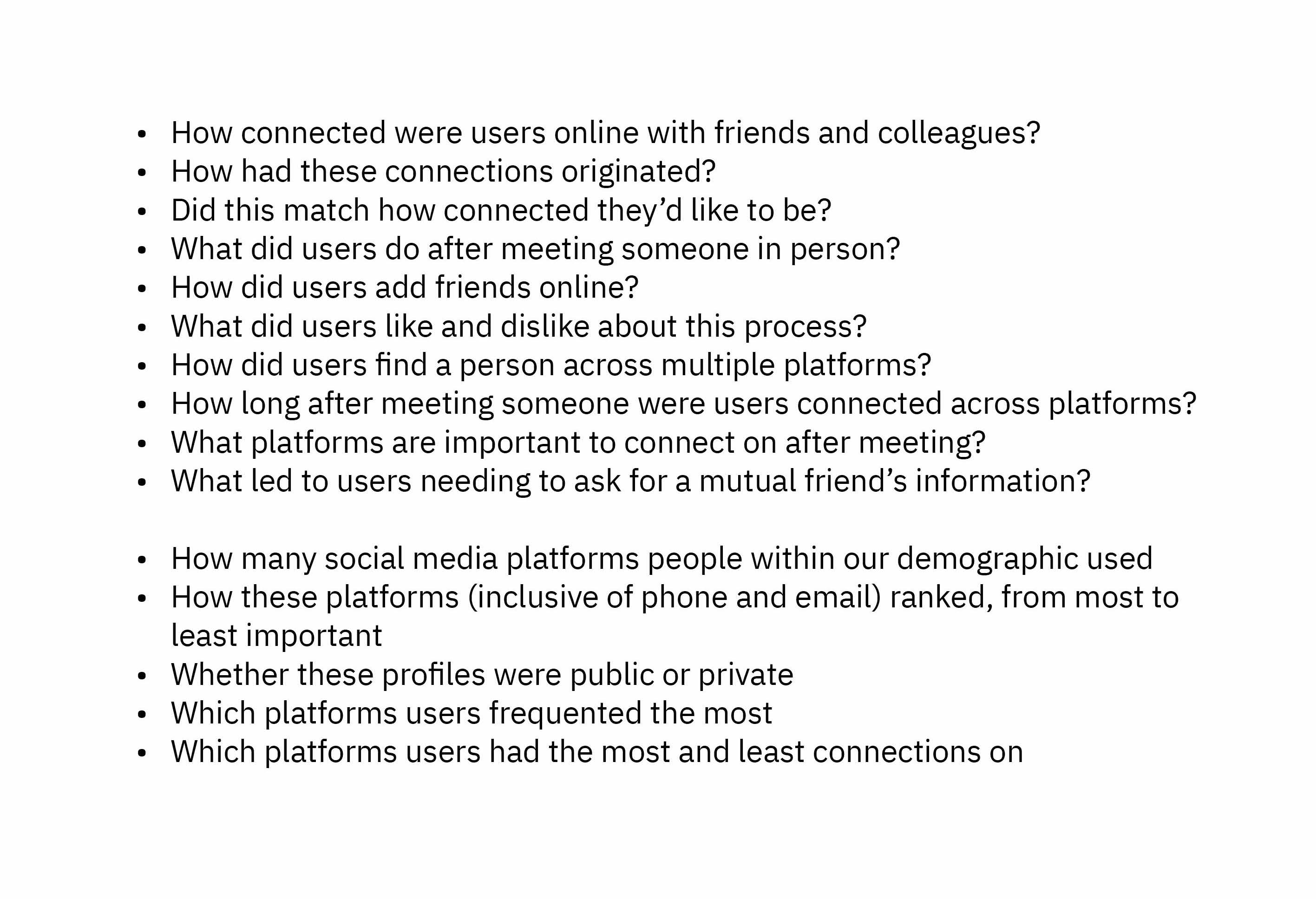
These were some of the questions we considered in approaching qualitative and quantitative research.
To better understand how people within Greet's target demographic used social networks and communicated with peers digitally, we interviewed users, sent out a survey, and took advantage of Pew Internet and other studies.
These were some of the questions we considered.

Talking to students
Talking to students
Our initial research targeted 67 college students based in the US.
They used 13 different platforms, on average.
The hierarchy of importance for users when exchanging information was phone number, Facebook, and Instagram.
The majority of users felt comfortable sharing certain handles publicly, but answers ranged dependent on the social platform. For example, 89% of users would feel comfortable with publicly sharing their LinkedIn or Twitter on a profile. 49% would publicly share their Snapchat. 20% of users would publicly share their phone number. This made it the information users felt most protective of.
Our initial research targeted 67 college students based in the US.
They used 13 different platforms, on average.
The hierarchy of importance for users when exchanging information was was phone number, Facebook, and Instagram.
The majority of users felt conformable sharing certain handles publicly, but answers ranged dependent on the social platform. For example, 89% of users would feel comfortable with publicly sharing their LinkedIn or Twitter on a profile. 49% would publicly share their Snapchat. 20% of users would publicly share their phone number. This made it the information users felt most protective of.

We found that students used accounts on 13 different platforms
"
It’s not immediate to be connected. From weeks to months… It just happens by coincidence, you’ll see them tagged in a friend’s post.
It’s not immediate to be connected. From weeks to months… It just happens by coincidence, you’ll see them tagged in a friend’s post.
The process of connection is lengthy, with pain points around discovery
The process of connection is lengthy, with pain points around discovery
Connecting, In-App
Connecting, In-App
In conducting competitive evaluation, one thing that sets Greet apart is its ability to add users on platforms from within the app.
This is especially useful at scale. Say you’ve just joined a school club, or attended a conference— groups offer the ability to quickly connect with a large number of people. You can access the information of members later, or connect with everyone across the platform(s) of your choice.
While completing our demo, I found that we couldn’t integrate with some APIs. This meant that we’d need to link users to certain profiles instead of the aim, connecting in-app. Given this, I re-evaluated how adding was initially consistently considered within Greet's profiles and groups.
In conducting competitive evaluation, one thing that set Greet apart is its ability to add users on platforms from within the app.
This is especially useful at scale. Say you’ve just joined a school club, or attended a conference— groups offer the ability to quickly connect with a large number of people. You can access the information of members later, or connect with everyone across the platform(s) of your choice.
While completing our demo, I found that we couldn’t integrate with some APIs. This meant that we’d need to link users to certain profiles instead of the aim, connecting in-app. Given this, I re-evaluated how adding was initially consistently considered within Greet's profiles and groups.
User Testing
User Testing
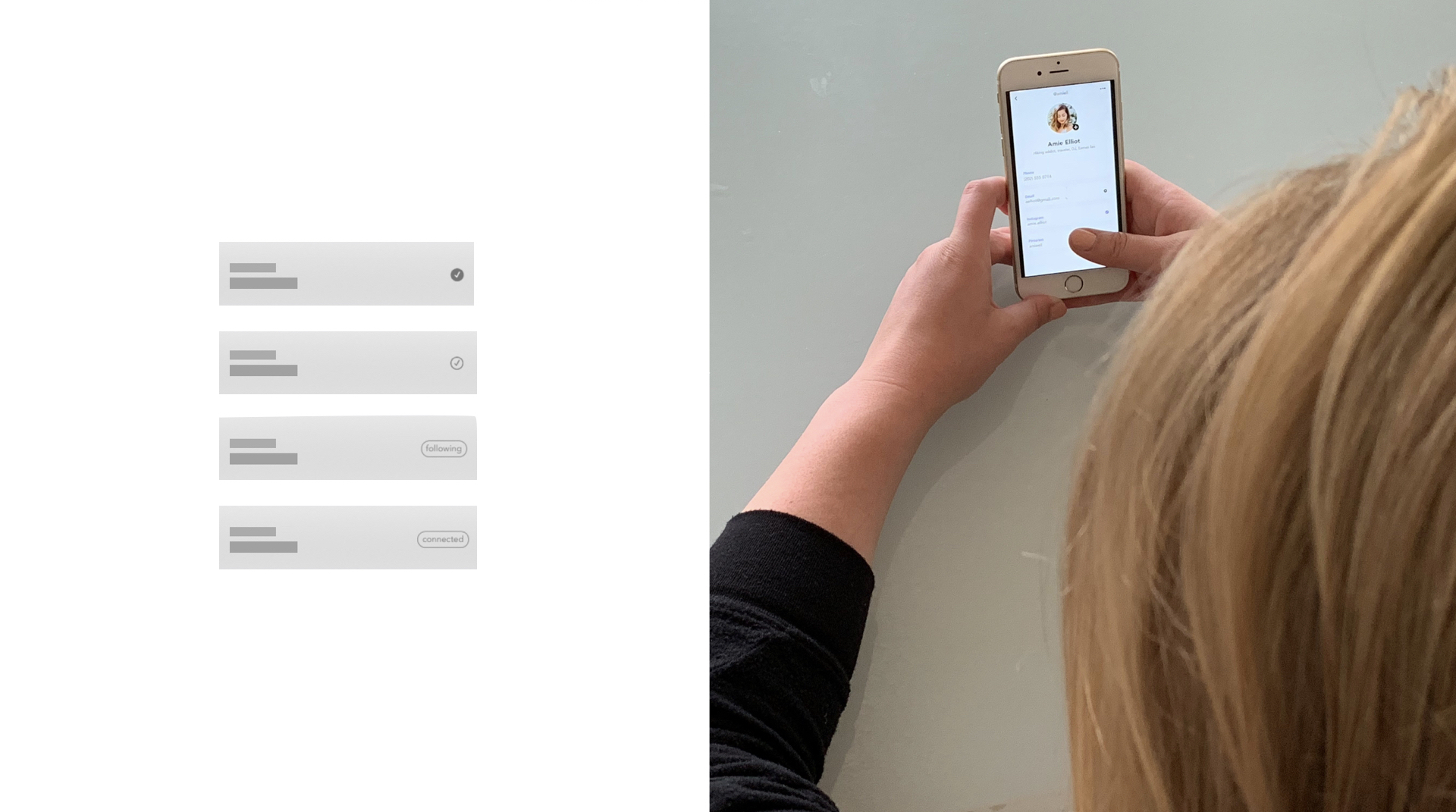
I wireframed and created interactive prototypes to test with users before we built the first demo. I also incorporated feedback from Greet's team.
Universal usernames were something we considered, as "62% of teens share their social media username as one of the first pieces of information... when they meet a brand new friend" (source). People said they permitted a verbal exchange and liked that they can provide context when searching for someone.
I wireframed and created interactive prototypes to test with users before we built a first demo. I also incorporated feedback from Greet's team.
Universal usernames were something we considered, as "62% of teens share their social media username as one of the first pieces of information they share... when they meet a brand new friend" (source). People said they permited a verbal exchange, and liked that they can provide context when searching for someone.
Privacy Concerns
Privacy Concerns
Though people expressed enthusiasm and shared personal experiences with the problem, many remained uneasy. The prevalent issue was that of people (from strangers to friends) seeing platforms that users would want hidden, and concern that social profiles would be public by default.
Customization (and clarity) was clearly important.
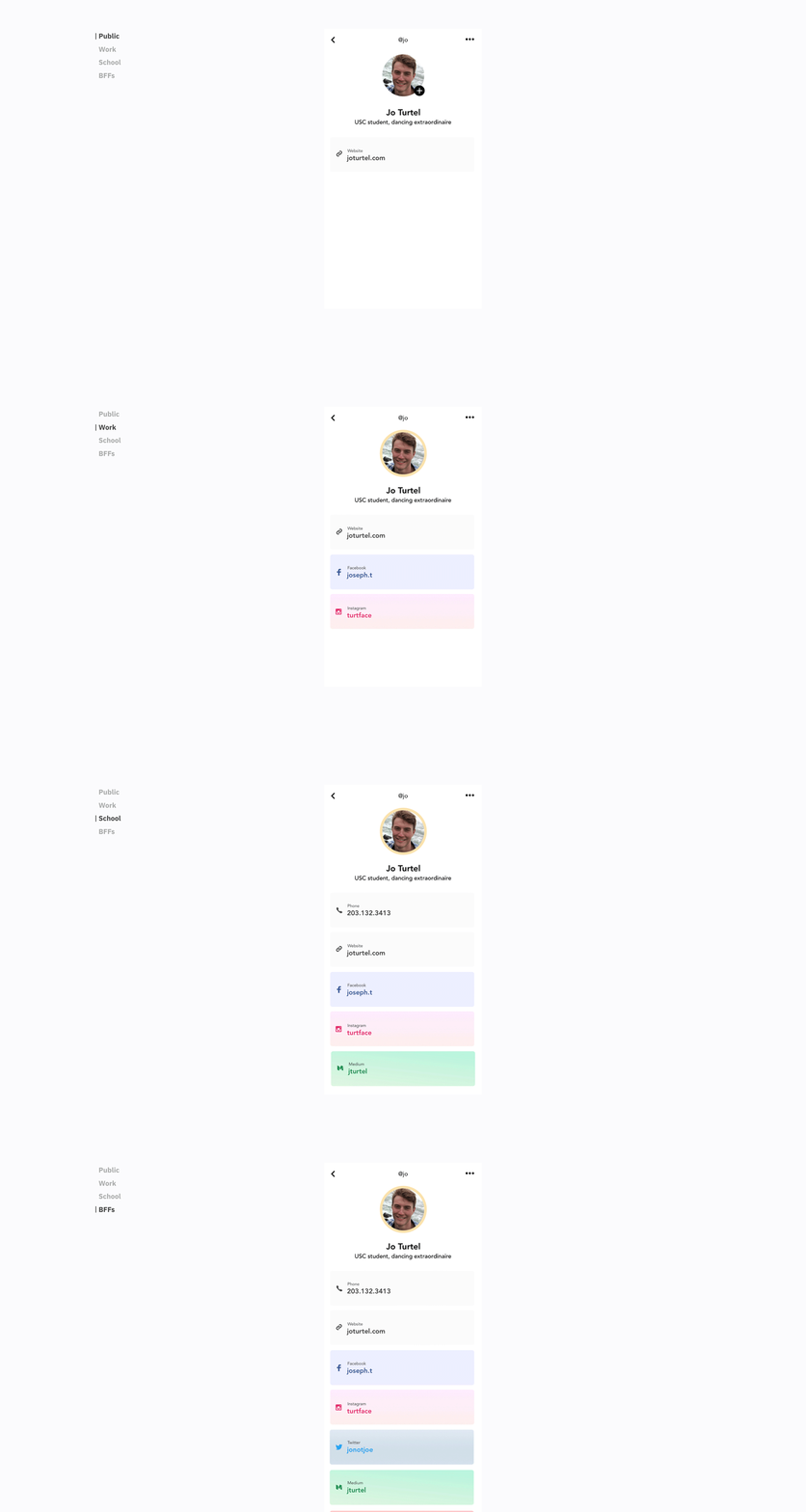
Ultimately, with different relationships, different content needed to be shared or withheld. A user might want to share their YouTube or 'Finsta' with closer friends, but not classmates or family— configurations of users' digital presences (e.g. for professional relationships versus friendships) emerged.
Though people expressed enthusiasm and shared personal experiences with the problem, many remained uneasy. The prevalent issue was that of people (from strangers to friends) seeing platforms that users would want hidden, and concern that social profiles would be public by default.
Customization (and clarity) was clearly important.
Ultimately, with different relationships different content needed to be shared or withheld. A user might want to share their YouTube or 'Finsta' with closer friends, but not classmates or family— configurations of users' digital presences (e.g. for professional relationships versus friendships) emerged.
IDs
IDs
IDs were the answer to these considerations. We had found that people had varying needs in sharing their social presence, but that these could generally be combined into a few categories.
When connecting with a person or group, a user can choose an ID, which encompasses their pre-set selection of accounts. This consolidated the process of selecting individual accounts to share upon each connection.
This still enabled modification (on the individual or ID level), custom connections, and public sharing.
IDs were the answer to these considerations. We had found that people had varying needs in sharing their social presence, but that these could generally be combined into a few categories.
When connecting with a person or group, a user can choose an ID, which encompasses their pre-set selection of accounts. This consolidated the process of selecting individual accounts to share upon each connection.
This still enabled modification (on the individual or ID level), custom connections, and public sharing.
Branding
Branding
With Greet, I wore a lot of hats— while researching, I conducted competitive analysis and identified our values, which helped to inform our branding and logo.
With Greet, I wore a lot of hats— while researching, I conducted competitive analysis and identified our values, which helped to inform our branding and logo.